
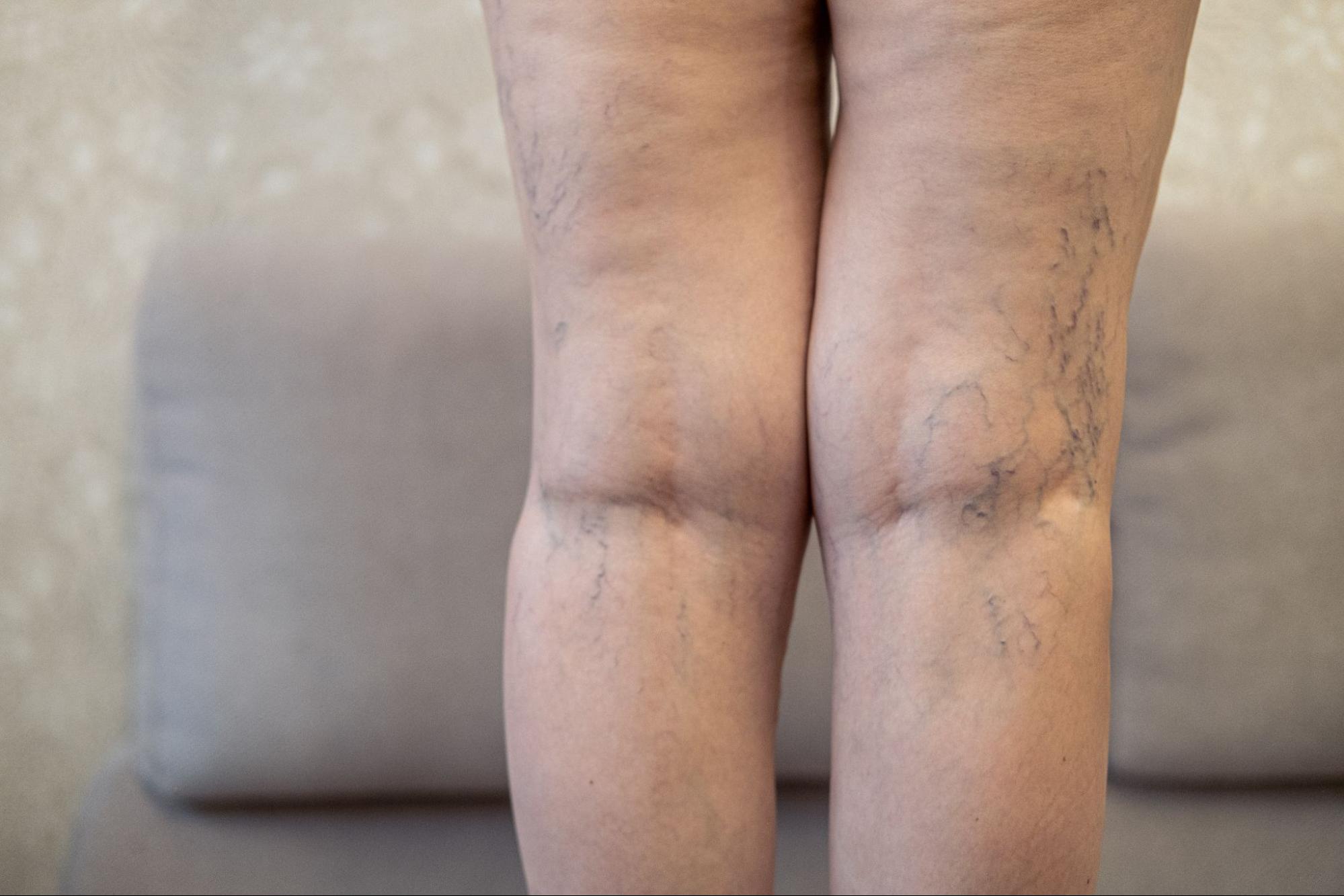
Dry, itchy skin around the ankles often gets brushed off as a minor irritation. In some adults, though, it shows up alongside swollen, twisted leg veins, and the two may be connected.
Reduced blood flow in the lower legs, usually because vein valves no longer close well, can show up on the skin. That shared root is the thread linking varicose veins and eczema, since both can be linked to poor venous circulation and the pressure it puts on the lower leg.
What Are Varicose Veins?
Inside the legs, small valves open and close to push blood upward against gravity toward the heart. If one fails, blood slips back down and pools where it shouldn’t. Month after month, the vein wall stretches under that strain, forming the swollen, twisting cords many people recognize as varicose veins.
Backward flow like this can point to chronic venous insufficiency, meaning the leg veins are no longer moving blood upward as well as they should. A few risk factors include age, extra weight, and long hours spent standing. Common complaints include heaviness, a dull ache, and veins that stand out more by the end of the day.
What Is Varicose Eczema?
Eczema is a broad term for inflamed, irritated skin. Varicose eczema, also called stasis dermatitis, develops in the lower legs when circulation is impaired. According to the American Academy of Dermatology, stasis dermatitis is a common form of eczema in people with poor blood flow, and it often shows up around the ankles.
Early signs to watch for include:
- Itching or dryness that keeps returning on the lower leg
- Patches of red, brown, or otherwise discolored skin
- Flaking or scaling near the ankle
- Swelling that gets worse as the day wears on
What sets varicose eczema apart from other kinds of eczema is the part circulation plays. Trouble with blood flow in the lower legs can feed straight into the skin inflammation.
How Are Varicose Veins and Eczema Connected?
The connection between varicose veins and eczema is really a circulation story. Once vein valves stop sealing, blood collects in the lower legs rather than draining back toward the heart. That trapped blood raises pressure on the surrounding tissue, and inflammation can follow. Over time, the skin starts to change in color, texture, and how it reacts to everyday contact.
It does not happen to everyone. Plenty of people have varicose veins and never develop varicose eczema. When the two do appear together, though, chronic venous insufficiency may be contributing to both. NICE guidance recommends referral to a vascular service for lower-limb skin changes, such as pigmentation or eczema, that may be caused by chronic venous insufficiency.
Skin changes that linger, or keep getting worse, are worth having the underlying circulation checked.
Treatment for Varicose Veins and Eczema
Care usually runs along two tracks. On the skin side, moisturizers, compression stockings, leg elevation, and topical treatments prescribed by a dermatologist help calm the inflammation.
The vein side deserves just as much attention when venous insufficiency is contributing to the symptoms. Here, a specialist may order a duplex ultrasound to see whether faulty blood flow in the leg veins is feeding the problem.
If that evaluation turns up venous reflux behind the symptoms, treatment for varicose veins and eczema can involve closing off the diseased veins so blood finds a healthier route. North Shore Vein Center works from the patient’s anatomy and ultrasound results to pick from several approaches:
- Endovenous radiofrequency ablation
- Endovenous laser ablation
- Sclerotherapy, including the ultrasound-guided form
- Ambulatory phlebectomy
Each approach is minimally invasive, and the choice depends on where the trouble is and what type of vein disease shows up on imaging. The goal is to redirect blood away from faulty veins and through healthier ones. When venous disease drives lower-leg symptoms, addressing the root cause can be part of a broader plan.
Varicose Vein Evaluation on Long Island
Adults on Long Island who keep noticing skin changes near visible leg veins do not have to wait for things to worsen. At North Shore Vein Center in New Hyde Park, Dr. Mark Schwartz uses ultrasound to evaluate blood flow, identify affected veins, and, when appropriate, provide minimally invasive treatment matched to what the scan shows. Anyone wondering whether venous insufficiency is behind their symptoms can book an assessment or call the New Hyde Park office at 516-869-8346.