
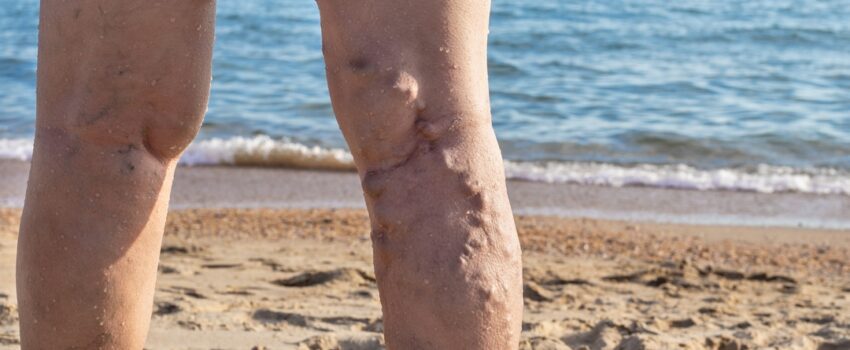
Nearly 30% of U.S. adults develop varicose veins at some point. On Long Island, that translates to a substantial number of people dealing with leg heaviness, visible vein changes, and discomfort that tends to worsen as the day goes on. The good news is that effective, minimally invasive varicose vein treatment is available close to home.
What Are Varicose Veins?
Veins rely on a series of small internal valves to keep blood moving in one direction: upward, toward the heart. When those valves weaken, blood flows back and pools inside the vein. Pressure builds, the vein wall stretches, and the result is the raised, twisted appearance most people recognize as a varicose vein.
Research shows venous reflux, the clinical term for that backward blood flow, is present in nearly 24% of the population. Genetics plays a role, but so do occupational factors such as standing or sitting for long periods. The condition has a clear physiological basis, which is why it responds to targeted medical treatment rather than cosmetic-only approaches.
Common Symptoms of Varicose Veins
Not everyone with varicose veins experiences the same symptoms, and severity varies considerably. That said, the following patterns come up consistently in patients seeking evaluation:
- Aching, throbbing, or cramping in the leg
- A heavy or tired feeling that builds throughout the day
- Burning or itching directly over the affected vein
- Swelling around the ankle or lower leg
- Skin discoloration or texture changes near the vein
Discomfort is often most pronounced after prolonged standing or sitting. Some patients notice symptoms long before the veins become visually obvious.
Why Varicose Veins Should Not Be Ignored
Varicose veins are not static. Left untreated, venous disease progresses through defined clinical stages. What begins as cosmetically bothersome veins can progress to persistent swelling, skin thickening, and, eventually, venous ulcers near the ankle. These wounds are notoriously slow to heal and, in some patients, require months of active wound care.
The data on this are worth noting: roughly 4% of adults over 65 develop venous ulcers. Diagnosis and treatment earlier in the disease course significantly reduce the risk of reaching that stage. Waiting is rarely in the patient’s interest.
Varicose Vein Treatment Options on Long Island
Evaluation at North Shore Vein Center begins with a physical exam and, when clinically indicated, a diagnostic ultrasound. Ultrasound identifies which veins are failing and maps the extent of reflux, giving the physician the information needed to select the most appropriate treatment. Each plan is built around the patient’s specific findings rather than a one-size-fits-all protocol.
Available minimally invasive treatments include:
- Endovenous Laser Ablation (EVLA): A laser fiber delivers precise heat inside the vein, sealing it closed. Most patients resume normal activity within a day of the procedure.
- Radiofrequency Ablation (RFA): Radiofrequency energy closes the diseased vein from within. Sessions are generally completed in under an hour.
- Ambulatory Phlebectomy: Larger surface veins are removed through small incisions. This is often performed alongside other treatments when sclerotherapy is not indicated.
- Foam and Ultrasound-Guided Sclerotherapy: A foam sclerosant collapses the vein on contact. Ultrasound guidance is used for veins that are deeper or not easily visible at the surface.
Why Choose North Shore Vein Center
North Shore Vein Center is a nationally recognized center of excellence in vein care. Dr. Mark Schwartz, MD, FACS, RPVI, known throughout Long Island as the Long Island Vein Doctor, leads a team that focuses exclusively on vein disease. That specialization matters: patients receive care from physicians who diagnose and treat venous conditions every day, using equipment and techniques that reflect current clinical standards.
All procedures are performed in-office at the New Hyde Park location, serving patients throughout Queens and Long Island. No referral is needed to schedule an initial consultation.
Patients who notice leg heaviness, visible varicosities, or any of the symptoms described above are encouraged to seek evaluation sooner rather than later. Contact North Shore Vein Center to schedule a consultation with Dr. Schwartz.