
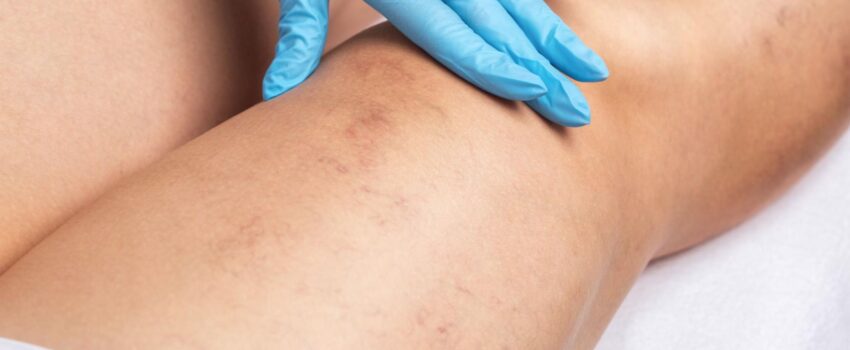
What Is Venous Insufficiency?
Venous insufficiency develops when leg veins struggle to move blood back to the heart. The valves inside the veins do not seal well, so blood can drift backward. When that happens, blood pools in the lower legs and pressure builds over time.
This problem often overlaps with varicose veins, which is why people link the two. Many patients notice symptoms during long days on their feet. It can feel minor at first, then it starts to shape daily routines.
One major review in Circulation estimates that about 2.5 million people in the U.S. experience chronic venous insufficiency. That same review reports that about 20% develop venous ulcers. Those ulcers matter because they can linger and complicate healing.
Symptoms of Venous Insufficiency
Symptoms usually start with sensations rather than visible changes. Many people feel heaviness, aching, or tightness in their legs. The discomfort often increases later in the day, especially after long standing.
Swelling around the ankles also fits the pattern. Some people notice itching or cramping, which can feel random at first. On the other hand, mornings may feel better, so the problem seems to come and go.
Over time, the skin may start to change. Discoloration can appear near the lower leg or ankle area. In advanced cases, the pressure and inflammation can contribute to open sores. That is when people often realize it is not just fatigue.
Diagnosing Venous Insufficiency
Most evaluations start with a simple physical exam of the legs, as well as information about the symptoms and when they started. Doctors look for patterns of swelling and changes in the skin. A venous duplex ultrasound comes next to confirm the unusual flow and find the exact veins that are causing the problem.
Ultrasound helps because it shows blood flow direction and timing in real time. It can document reflux, which means blood reverses when it should not. Many guidelines define reflux as more than 0.5 seconds in superficial truncal veins. For key deep veins, reflux commonly means more than 1 second.
Those cutoffs guide decisions. They help clinicians target the vein that drives symptoms. They also help avoid guessing based on appearance alone.
How Is Venous Insufficiency Treated?
Treatment often starts with simple symptom relief and day-to-day habits. Compression stockings can reduce swelling and heaviness for many people. Leg elevation and regular movement often help as well, even if it sounds too simple.
When symptoms persist, clinicians often treat the reflux itself. Modern care focuses on minimally invasive, in-office procedures. The goal is to close the diseased vein and redirect blood through healthier pathways.
Endovenous laser ablation (EVLA) uses heat delivered inside the vein to close the problem segment. Endovenous radiofrequency ablation (RFA) uses radiofrequency energy through a small catheter to achieve the same goal. Both approaches target reflux with minimally invasive, in-office care, without relying on traditional vein stripping.
Sclerotherapy can also play a role, especially for smaller veins. Ultrasound-guided sclerotherapy supports accuracy when treating deeper targets. For spider veins, the North Shore Vein Center features VeinGogh™ technology.
CVI also carries a broader burden than most people realize. Chronic venous insufficiency care accounts for about 2% of total U.S. healthcare. That figure does not mean everyone needs a procedure. It does suggest that early evaluation can prevent bigger problems later.
Book a Visit With North Shore Vein Center
Long Island patients with venous insufficiency symptoms do not have to push through heaviness and swelling. A clear exam and ultrasound can confirm what is happening and map the next steps. North Shore Vein Center presents care as minimally invasive, outpatient, and guided by modern vein imaging.
We help patients manage venous insufficiency with accredited, ultrasound-driven evaluation and targeted treatment options. To take the next step, contact our office to schedule an appointment.