
Leg veins have a way of getting dismissed. A little swelling after a long day, a few visible veins, an ache that comes and goes. Most of the time, these signs get chalked up to age or a busy schedule.
For adults across Long Island, though, those small symptoms can point to something worth a closer look. As many as 40 million Americans have varicose veins, yet visible veins and mild leg symptoms can be easy to overlook.
Preparing a few questions to ask about your vein health can help you get more from an appointment with a vein specialist. Here are some useful questions to bring to the conversation.
Questions to Ask About Your Vein Health
What is causing my symptoms?
Visible veins, swelling, aching, itching, heaviness, cramps, or skin changes can all trace back to problems with your leg veins. These sensations often get worse after long stretches of sitting or standing and ease up when you elevate your legs.
A vein specialist can tell you whether you are looking at spider veins, varicose veins, or venous insufficiency, since the symptoms overlap with arterial, nerve, and muscle issues too.
Could this be a blood clot?
Sudden swelling, unexplained pain or tenderness, warmth, and redness or discoloration can signal deep vein thrombosis. According to the CDC, about half of people with DVT have no symptoms at all.
The CDC further estimates that up to 900,000 Americans experience venous thromboembolism each year. Anyone who develops possible DVT symptoms should seek medical care promptly.
Do I need a duplex ultrasound?
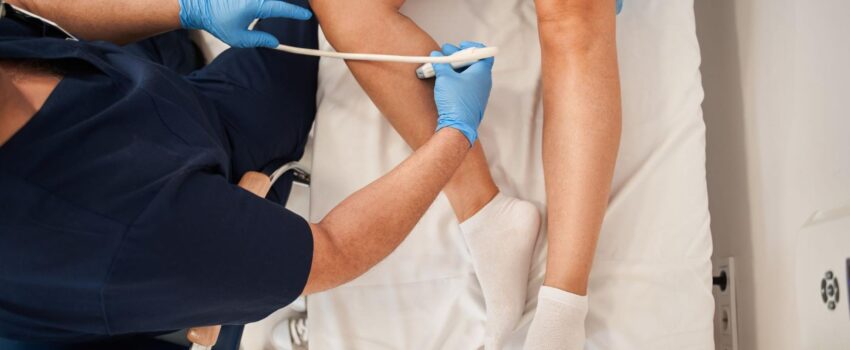
This noninvasive scan assesses blood flow, looks for venous reflux, and checks for signs of a clot. Clinical guidelines treat it as the go-to test for lower-leg vein disease, so it is a reasonable expectation during a thorough evaluation.
Which risk factors apply to me?
Your routine is only one part of the story. Age, pregnancy, family history, smoking, inactivity, obesity, and previous blood clots may all be relevant. Hormonal medications can also affect risk. Sharing these details helps a specialist place your symptoms in context and decide whether testing is appropriate for you.
What happens if I wait?
Varicose veins and venous insufficiency often change gradually. Swelling or aching may become harder to ignore, and some people later develop skin discoloration, inflammation, bleeding, or sores. An evaluation can show whether the condition is still mild, how quickly it may be progressing, and whether treatment is worth considering now.
What are my treatment options?
Vein treatment ranges widely. Some patients do well with compression stockings and small lifestyle tweaks. Others need sclerotherapy or a quick in-office procedure like laser or radiofrequency ablation. Ask your doctor how each choice maps to your specific veins, and what makes one the better fit.
What should recovery look like?
Recovery depends on the type of vein treatment you receive. Many minimally invasive procedures involve little downtime, although you may need compression stockings, temporary limits on strenuous activity, or a follow-up ultrasound. Your specialist can explain when you may return to work, exercise, and other parts of your normal routine.
Schedule an Appointment Today to Evaluate Your Vein Health
If any of these questions hit close to home, a proper evaluation of your leg veins on Long Island is a smart next step. North Shore Vein Center provides advanced vein and vascular care to patients across Long Island and nearby New York communities at its New Hyde Park office. Reach out today to set up your consultation and get real answers about your v